Quick Verdict
Our buying guide for the Bearer EM59 Digital 3-in-1 TENS Unit, AI-scored 9.0/10.
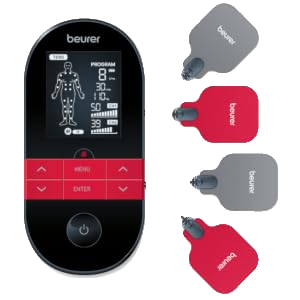
⭐ Featured in this article
Bearer EM59 Digital 3-in-1 TENS Unit
Who Should Buy This
The Bearer EM59 makes sense if you're dealing with chronic pain that affects multiple body areas and want one device to handle it all. Athletes recovering from muscle strains, people with arthritis in different joints, or anyone managing back pain alongside shoulder tension will appreciate the dual-channel setup—you're treating two problem spots simultaneously without buying separate units.
If you've been eyeing TENS/EMS devices but hesitated due to cost, the 3-in-1 functionality gives you legitimate value. Rather than spending more on a TENS unit, then another its current price on an EMS unit, you're consolidating. The 24 pre-set modes mean you're not guessing at settings; the device includes targeted programs for specific issues like muscle soreness, nerve pain, and circulation improvement.
Consider this device if you prefer digital simplicity. The interface appears straightforward without overwhelming customization options that most users never actually adjust. If your pain management needs are consistent rather than highly experimental, the pre-programmed modes will likely cover what you need.
Who Should Skip It
Skip the EM59 if low-light usability matters to you. The LCD screen without backlighting is a genuine inconvenience for nighttime pain management or use in dimly lit spaces. If you're treating pain before bed or early morning when you can't turn on bright lights, you'll struggle reading intensity levels and mode selections.
Also consider skipping if you're cost-sensitive about ongoing expenses. Proprietary electrode pads aren't a dealbreaker for everyone, but they do lock you into Bearer's replacement ecosystem. Universal pads typically cost at its current price per set and come from multiple manufacturers. Bearer's pads may cost more or become harder to source in two years if the product line changes. If you use electrode pads heavily (weekly replacements), this compounds your total ownership cost.
Finally, skip this if you need highly customizable intensity and frequency settings. The 24 modes are helpful, but they're fixed programs. If you're the type who wants granular control over pulse rates and stimulation patterns, you'll find the device limiting.
Key Features to Evaluate
The 3-in-1 functionality deserves scrutiny. TENS (Transcutaneous Electrical Nerve Stimulation), EMS (Electrical Muscle Stimulation), and massage modes aren't equal features—TENS helps manage pain signals, EMS stimulates muscle contractions for recovery and strength, and massage mode is gentler for circulation. Consider whether you actually need all three or if one or two modes would genuinely benefit your situation. Many users get good results with TENS alone.
The dual independent channels are the real differentiator here. You're controlling two separate treatments with distinct settings simultaneously. This matters if your pain is multi-location (lower back and knee, for example) rather than single-spot. Verify that "independent" means truly separate intensity and mode selection—not just two pads running the same program at the same strength.
The 24 pre-set modes sound impressive, but quality matters more than quantity. Check reviews to confirm these modes actually address your specific pain type. A device with 24 modes where 15 are redundant is less useful than one with 8 well-designed programs. Look for modes specifically labeled for your condition rather than generic "pain relief" settings.
Battery life and charging method matter more than packaging suggests. Confirm whether the device uses replaceable batteries (easier, cheaper long-term) or rechargeable batteries (more convenient short-term, degradation over years). Check estimated usage hours per charge.
Price vs Value
At its current price, the EM59 sits in the mid-range for combo devices. You're not paying entry-level TENS unit prices, but you're also not hitting premium clinical-grade pricing. The math works if you genuinely need multiple therapies—consolidating three devices into one at roughly equivalent cost justifies the purchase. If you only need TENS, buying a single-mode unit makes more financial sense.
Factor in total cost of ownership. Proprietary pads may add extra yearly if you're an active user. That shifts your effective annual cost upward. If you only use it occasionally (monthly treatments), pad costs become negligible. Frequent users should account for this in the value equation.
The AI score of 9.0/10 reflects functionality and user satisfaction, not whether it's the cheapest option. You're paying appropriately for feature consolidation and pre-programmed convenience.
Our Verdict
The Bearer EM59 is a solid choice if you have multiple pain locations and want one reliable device rather than a collection of single-function units. The 3-in-1 approach genuinely simplifies pain management, and 24 pre-set modes reduce decision fatigue during treatment.
The backlight limitation is annoying but not deal-breaking for most daytime users. The proprietary pad situation is worth considering only if you expect high replacement frequency.
Buy it if: You have multiple pain areas, prefer preset convenience, and want to eliminate device clutter. Skip it if: You treat pain primarily at night, need granular customization, or expect to replace pads frequently. For everyone else evaluating pain management devices, this lands solidly in the "worth buying" category at its price point.
Ready to buy?
Bearer EM59 Digital 3-in-1 TENS Unit
View on Amazon →Affiliate link — we may earn a commission at no extra cost to you
Get AI-curated deals like these every week
Free picks from our research engine. No spam — unsubscribe anytime.
No comments yet — be the first to share your experience.